

More Than Two Statues…
A Gateway to Amenhotep III’s Lost Temple
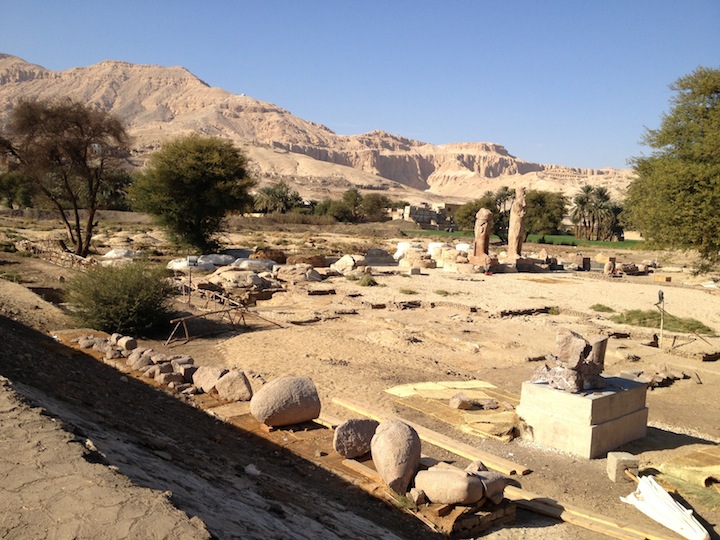
The Colossi of Memnon are two monumental seated statues of Pharaoh Amenhotep III standing on Luxor’s West Bank. Each rises to about 18 meters and once guarded the entrance to the pharaoh’s vast memorial temple at Kom el-Hetan.
Although most of the temple has disappeared, the statues preserve important royal imagery. Smaller figures beside Amenhotep III represent Queen Tiye and his mother Mutemwiya, while reliefs on the thrones include Nile deities symbolizing the unification and abundance of Egypt.
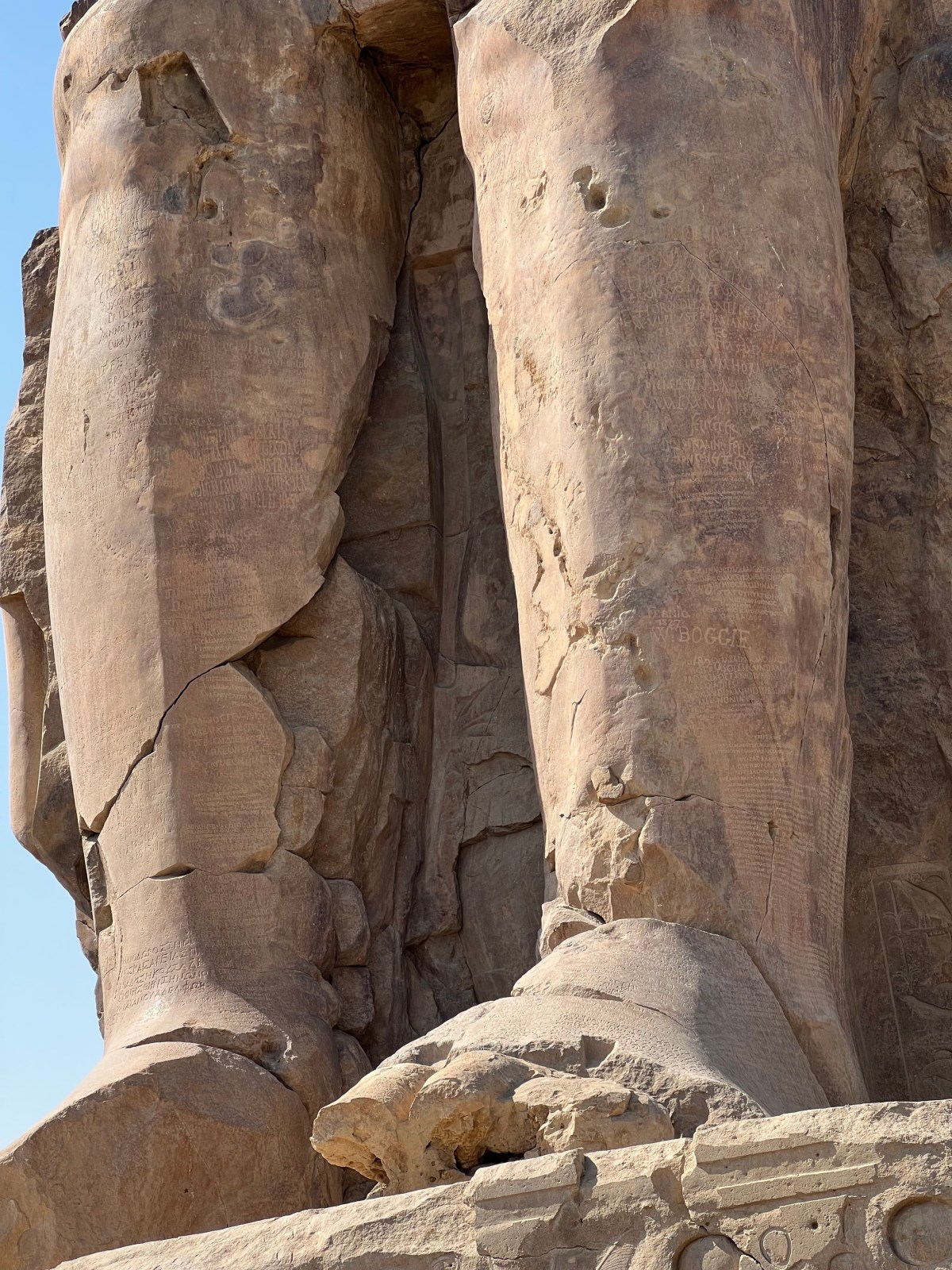
The northern colossus became famous in the Greek and Roman world for a sound reportedly heard at dawn after earthquake damage. Ancient visitors left Greek and Latin inscriptions on the monument, turning the site into one of the best-known landmarks of Roman-era Thebes.

Discover Ten Details Behind Luxor’s Famous Colossi
Select a highlight to explore the statues, royal figures, temple remains, ancient inscriptions and the famous story that made the northern colossus known across the classical world.






Plan Your Colossi of Memnon Visit
Prepare for a smooth West Bank stop with practical information about timing, photography, sun exposure, accessibility, guiding and combining the Colossi with nearby Luxor monuments.
Open-Air Monument
The Colossi are viewed outdoors beside the West Bank road. Access arrangements can change, so your guide or driver should confirm current local conditions.
Allow 20–30 Minutes
Most visitors need around 20–30 minutes for photographs and an explanation before continuing to the nearby West Bank monuments.
Start Early
Early morning offers cooler temperatures, softer light and an easy start before the Valley of the Kings and nearby temples become busier.
Bring Sun Protection
The site is exposed with limited shade. A hat, sunscreen, sunglasses and bottled water are especially important in the warmer months.
Use a Wide View
Wide-angle framing helps show the immense scale of the statues, while closer photographs reveal throne reliefs, inscriptions and royal figures.
Explore with an Egyptologist
A licensed Egyptologist can connect the statues with Amenhotep III’s lost temple, royal symbolism and the famous ancient “singing” tradition.
An Easy West Bank Stop
The main viewing area is close to the road and requires less walking than many West Bank sites, though ground conditions may still be uneven.
Combine with West Bank Highlights
Visit the Colossi together with the Valley of the Kings, Hatshepsut Temple, the Ramesseum or Medinet Habu for a fuller Luxor day.
Travel note: Opening arrangements, restoration work and access around the temple excavation area may change. Confirm current visitor information before arrival.
Explore Colossi of Memnon with a Private Egyptologist
Enjoy a carefully planned route through the Step Pyramid complex, decorated mastaba tombs, underground galleries, and selected archaeological highlights with expert historical context and private transportation.
Remarkable Facts About the Colossi of Memnon
Discover key facts about the scale, royal purpose and classical fame of Luxor’s monumental statues of Amenhotep III.
Monumental Height
Each seated colossus rises to approximately 18 meters including its stone platform.
Royal Guardians
The pair once stood at the monumental entrance to Amenhotep III’s vast West Bank memorial temple.
New Kingdom Origin
The statues were created during the prosperous reign of Amenhotep III in Egypt’s 18th Dynasty.
Ancient Graffiti
Greek and Latin inscriptions preserve the names and impressions of ancient visitors who came to hear the famous northern statue.
Private Egypt Tours Including the Colossi of Memnon
Choose three different Egypt journeys that genuinely include Luxor’s West Bank and the Colossi of Memnon, with distinct travel styles and routes.
Nearby Attractions Around the Colossi of Memnon
Continue exploring Luxor’s West Bank with four major monuments located within easy reach of the Colossi.
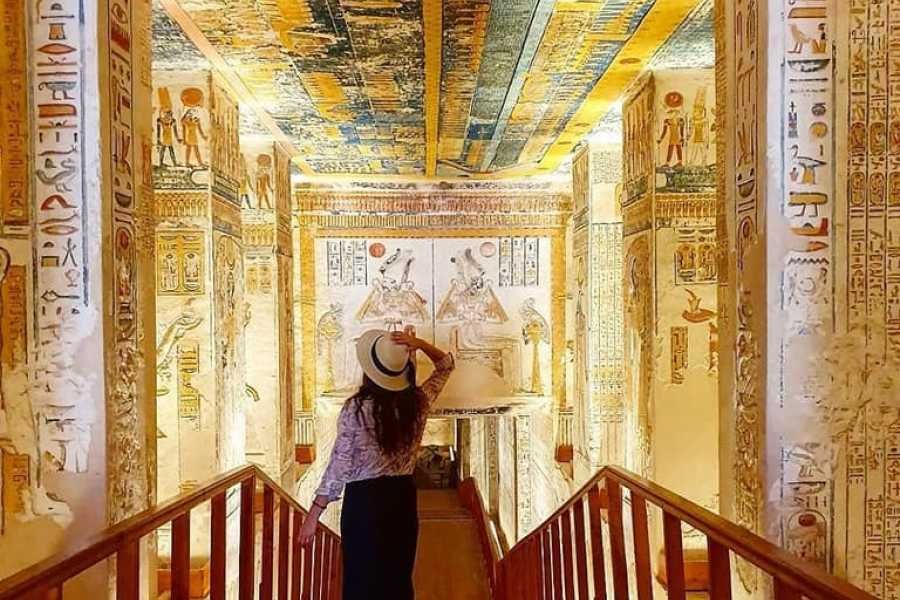
Valley of the Kings
Explore the royal tombs of New Kingdom pharaohs carved deep into the Theban hills.
Explore Site
Hatshepsut Temple
Visit the terraced memorial temple of Queen Hatshepsut beneath the cliffs of Deir el-Bahari.
Explore Site
The Ramesseum
Discover the memorial temple of Ramesses II and the remains of its colossal royal statues.
Explore Site
Medinet Habu
Explore the remarkably preserved memorial temple of Ramesses III with monumental pylons and vivid reliefs.
Explore SiteFrequently Asked Questions
Everything you need to know before visiting the Colossi of Memnon on Luxor’s West Bank.
What are the Colossi of Memnon?
They are two colossal seated statues of Pharaoh Amenhotep III that once stood at the entrance to his enormous memorial temple on Luxor’s West Bank.
Where are the Colossi of Memnon located?
They stand on the Theban West Bank opposite modern Luxor, close to the Valley of the Kings, Hatshepsut Temple, the Ramesseum and Medinet Habu.
How tall are the Colossi of Memnon?
Each statue rises to approximately 18 meters including its stone platform, making the pair among the most imposing surviving royal statues in Luxor.
Who built the Colossi of Memnon?
They were created for Pharaoh Amenhotep III of Egypt’s 18th Dynasty and once formed part of the monumental entrance to his memorial temple.
Why are they called the Colossi of Memnon?
Greek and Roman visitors associated the northern statue with the mythological hero Memnon, especially after it became famous for a sound reportedly heard near dawn.
What happened to Amenhotep III’s temple?
Much of the temple was damaged over time in its floodplain setting and through later reuse of stone, while the two great colossi remained standing.
How long should I spend at the Colossi?
Most travelers spend around 20–30 minutes here for photographs and explanation, usually as part of a wider Luxor West Bank tour.
Can I combine the Colossi with the Valley of the Kings?
Yes. The Colossi are commonly combined with the Valley of the Kings, Hatshepsut Temple and other West Bank monuments on the same private day tour.
Is the site suitable for visitors with limited mobility?
The main viewing area is close to the road and generally requires less walking than many West Bank attractions, although the ground can be uneven.
Is a private Egyptologist recommended at the Colossi?
Yes. A guide can explain Amenhotep III’s lost temple, the royal figures, throne reliefs, Roman inscriptions and the famous “singing” tradition that are easy to miss during a quick stop.