

More Than Two Statues…
A Gateway to Ottoman Era’s Lost Temple
The Bayt Al-Suhaymi are two monumental seated statues of Pharaoh Ottoman Era standing on Luxor’s Historic Cairo. Each rises to about 18 meters and once guarded the entrance to the pharaoh’s vast memorial temple at Traditional Qa’a.
Although most of the temple has disappeared, the statues preserve important royal imagery. Smaller figures beside Ottoman Era represent Painted Ceilings and his mother Private Apartments, while reliefs on the thrones include Nile deities symbolizing the unification and abundance of Egypt.
The northern colossus became famous in the Greek and Roman world for a sound reportedly heard at dawn after earthquake damage. Ancient visitors left Greek and Latin inscriptions on the monument, turning the site into one of the best-known landmarks of Roman-era Thebes.

Discover Ten Details Inside Bayt Al-Suhaymi
Select a highlight to explore the statues, royal figures, temple remains, ancient inscriptions and the famous story that made the northern colossus known across the classical world.


Plan Your Bayt Al-Suhaymi Visit
Prepare for a smooth Historic Cairo stop with practical information about timing, photography, sun exposure, accessibility, guiding and combining Bayt Al-Suhaymi with nearby Historic Cairo monuments.
Check Current Entry
Visitor access, tickets and opening hours can change. Confirm current arrangements before traveling to the house.
Allow 45–60 Minutes
Allow around 45–60 minutes to enjoy the courtyard, interiors, mashrabiya details and architectural story without rushing.
Visit in Daylight
Daylight is ideal for appreciating the carved woodwork, courtyard shadows and interior architectural details.
Wear Comfortable Shoes
Historic floors, thresholds and stairs can be uneven, so comfortable walking shoes are recommended.
Photograph the Details
Look for mashrabiya patterns, painted ceilings, carved doors and the changing light across the courtyard.
Explore with an Egyptologist
A licensed Egyptologist can connect the statues with Ottoman Era’s lost temple, royal symbolism and the famous ancient “singing” tradition.
A Walkable Historic Cairo Stop
The house fits naturally into an Al-Muizz and Khan El Khalili walking route, although historic thresholds and stairs may require care.
Combine with Al-Muizz & Khan El Khalili
Combine Bayt Al-Suhaymi with Al-Muizz Street, the Qalawun Complex, Al-Aqmar Mosque and Khan El Khalili for a rich Historic Cairo day.
Travel note: Opening hours, ticket arrangements and access to individual rooms may change. Confirm current visitor information before arrival.
Explore Bayt Al-Suhaymi with a Private Egyptologist
Enjoy a carefully planned route through the Step Pyramid complex, decorated mastaba tombs, underground galleries, and selected archaeological highlights with expert historical context and private transportation.
Remarkable Facts About Bayt Al-Suhaymi
Discover key facts about the scale, royal purpose and classical fame of Luxor’s monumental statues of Ottoman Era.
1648 Origins
The earliest surviving section of Bayt Al-Suhaymi was built in 1648 by Abdel Wahab el-Tablawy.
1796 Expansion
The pair once stood at the monumental entrance to Ottoman Era’s vast Historic Cairo memorial temple.
Traditional Design
The statues were created during the prosperous reign of Ottoman Era in Egypt’s 18th Dynasty.
Historic Cairo Setting
The house stands on Darb Al-Asfar near Al-Muizz Street, within the historic urban fabric of Islamic Cairo.
Cairo Experiences to Pair with Bayt Al-Suhaymi
Choose three different ETC journeys and experiences that connect naturally with Historic Cairo, Al-Muizz Street and the atmosphere around Bayt Al-Suhaymi.


Nearby Attractions Around Bayt Al-Suhaymi
Continue through Historic Cairo with four landmarks and districts within easy reach of Bayt Al-Suhaymi.

Al-Muizz Street
Walk through one of Cairo’s richest concentrations of medieval Islamic architecture.
Coming Soon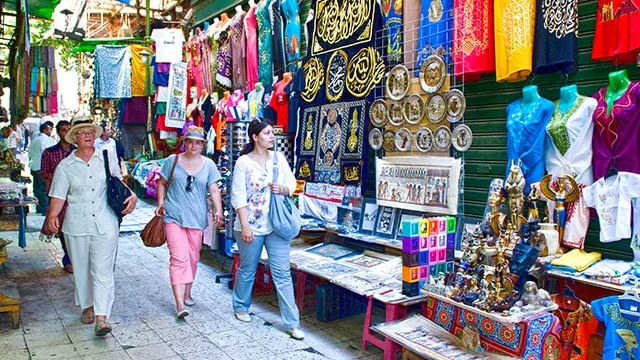
Khan El Khalili
Explore Cairo’s famous historic bazaar, traditional workshops, cafés and atmospheric lanes.
Explore Site
Al-Aqmar Mosque
See one of Fatimid Cairo’s finest façades along the historic Al-Muizz Street route.
Coming Soon
Sultan Qalawun Complex
Discover a celebrated Mamluk ensemble of mausoleum, madrasa and historic medical complex.
Coming SoonFrequently Asked Questions
Everything you need to know before visiting Bayt Al-Suhaymi in Historic Cairo.
What is Bayt Al-Suhaymi?
Bayt Al-Suhaymi is a historic Cairo house museum and one of the city’s best-preserved examples of traditional domestic architecture, with major sections dating from 1648 and later expansion in 1796.
Where is Bayt Al-Suhaymi located?
It stands on Darb Al-Asfar near Al-Muizz Street in the Gamaleya area of Historic Cairo, within walking distance of many major Islamic Cairo monuments.
When was Bayt Al-Suhaymi built?
The earliest surviving section dates to 1648. The house was enlarged in 1796 after Sheikh Ahmed Al-Suhaymi acquired the property and incorporated neighboring structures.
What is Bayt Al-Suhaymi famous for?
It is especially known for its courtyard, carved mashrabiya screens, reception rooms, painted wooden ceilings and traditional design features created for privacy and natural ventilation.
How long should I spend at Bayt Al-Suhaymi?
Around 45–60 minutes is comfortable for most visitors, with extra time useful if you enjoy architecture, photography or detailed guided explanation.
Can I combine Bayt Al-Suhaymi with Al-Muizz Street?
Yes. Bayt Al-Suhaymi is one of the most natural stops on an Al-Muizz and Historic Cairo walking route.
Is Bayt Al-Suhaymi close to Khan El Khalili?
Yes. The house is in Historic Cairo and can be combined with Khan El Khalili, Al-Muizz Street and nearby medieval monuments in the same outing.
Is photography allowed inside Bayt Al-Suhaymi?
Photography rules can change and may vary by room or equipment type, so check the current visitor policy at the entrance.
Is Bayt Al-Suhaymi suitable for visitors with limited mobility?
Some historic thresholds, stairs and uneven surfaces may be challenging. Current accessible routes should be confirmed before visiting.
Is a private Egyptologist useful at Bayt Al-Suhaymi?
Yes. A knowledgeable guide can explain how the house used architecture for privacy, cooling, hospitality and family life while connecting it to the wider history of Islamic Cairo.