
.jpg?width=1600)
A Monumental Sanctuary of Hathor
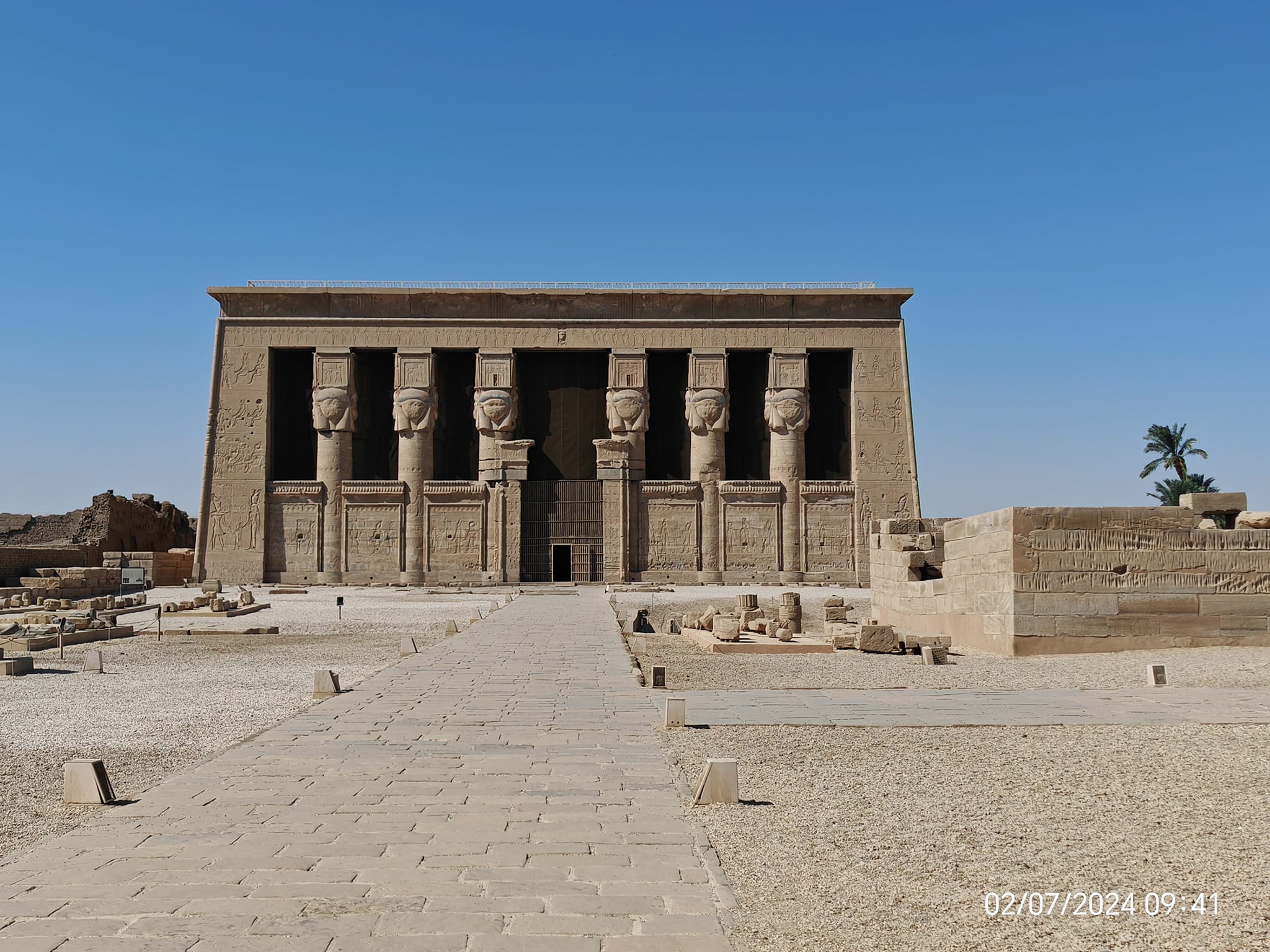
Dendera Temple Complex stands near Qena, north of Luxor, on a sacred site known to the ancient Egyptians as Iunet. Its dominant monument is the Temple of Hathor, goddess of music, joy, motherhood and the sky.
The surviving temple was developed mainly during the late Ptolemaic and Roman periods, although worship at Dendera reached far deeper into Egyptian history. Its massive stone roof shelters richly carved halls, chambers and crypts.
Visitors can follow processional stairways to rooftop chapels, study restored celestial imagery across the hypostyle ceiling, and see exterior reliefs of Cleopatra VII and Caesarion. The wider precinct also preserves birth houses, a sacred lake and a Coptic basilica.

Ten Highlights Inside Dendera Temple Complex
Move from Hathor’s monumental hall to hidden crypts, ceremonial stairways and rooftop chapels.


.jpg?width=1000)


Plan a Better Dendera Visit
Use these practical tips to enjoy the complex from its crypts to its roof.
Start with the Main Hall
Explore the restored ceiling before moving into the darker inner chambers.
Allow 2–3 Hours
Include the main temple, crypts, roof, mammisi and exterior reliefs.
Visit Earlier
Morning light and cooler temperatures suit the exposed precinct.
Look Up Frequently
Dendera’s ceilings carry some of its most remarkable decoration.
Water & Stable Shoes
Stone stairs, roof areas and uneven surfaces reward practical footwear.
Check Current Rules
Some chambers or special areas may have separate photography restrictions.
Expect Stairs
The roof and crypts involve confined routes and substantial steps.
Travel Privately
A private vehicle makes Dendera an easy day trip from Luxor.
Explore Dendera with a Private Egyptologist
Connect Hathor, astronomy, royal ritual and the temple’s hidden architecture.
Remarkable Dendera Temple Facts
Hathor Columns
The great hypostyle hall is supported by twenty-four monumental columns.
Royal Relief
The last Ptolemaic queen appears with Caesarion on the rear exterior wall.
Circular Zodiac
The famous zodiac was carved in a rooftop Osiris chapel.
Accessible Crypts
Dendera preserves a remarkable system of decorated crypt chambers.
Include Dendera in Your Egypt Journey


Nearby Attractions Around Dendera
Continue south to four published ETC guides in Luxor.


Dendera Temple Visitor Questions
Clear answers for planning a day trip to the Temple of Hathor.
What is Dendera Temple Complex?
Dendera is a large sacred precinct near Qena dominated by the exceptionally well-preserved Temple of Hathor.
Where is Dendera Temple located?
It stands near the modern village of Dendera in Qena Governorate, north of Luxor.
Who was the temple dedicated to?
The main temple honored Hathor, goddess of music, joy, motherhood, love and the sky.
When was Dendera Temple built?
The surviving Temple of Hathor was developed mainly during the late Ptolemaic and Roman periods on a much older sacred site.
What is special about Dendera’s ceiling?
The great hypostyle hall preserves restored astronomical decoration with vivid color, divine figures and celestial boats.
Can visitors enter the crypts?
Access to particular crypts can change, so visitors should confirm current site arrangements before travel.
Can visitors go onto the temple roof?
Roof access has historically been a major feature of a Dendera visit, but current access should always be reconfirmed.
Where is the original Dendera Zodiac?
The original circular zodiac is displayed in the Louvre Museum in Paris; a replica remains in its Dendera chapel.
How long should I spend at Dendera?
Allow roughly two to three hours for the main temple, roof, crypts, exterior reliefs and subsidiary buildings.
Is Dendera a UNESCO World Heritage Site?
Dendera is included within the Pharaonic Temples in Upper Egypt UNESCO Tentative List rather than being an inscribed World Heritage property.