

More Than a Mortuary Temple…
The Monument of Egypt’s Great Female Pharaoh
The Mortuary Temple of Hatshepsut rises dramatically against the cliffs of Deir el-Bahari on Luxor’s West Bank. Built during the 18th Dynasty for one of Egypt’s most remarkable rulers, the temple combines monumental architecture, political symbolism, religious devotion, and royal propaganda in a uniquely elegant setting.
Designed on a series of broad terraces linked by ramps, the temple was closely associated with the cult of Amun and with Hatshepsut’s claim to divine kingship. Reliefs describe her divine birth, her coronation, and the famous expedition to the land of Punt, one of the most important trading journeys recorded in ancient Egyptian art.
The complex also contains sanctuaries dedicated to Amun, Hathor, and Anubis, along with chapels, colonnades, statues, and painted reliefs. Its architecture blends so closely with the surrounding cliffs that the temple remains one of the most visually distinctive monuments of ancient Thebes.

Discover the Most Remarkable Highlights of Hatshepsut Temple
Select a highlight to explore monumental terraces, sacred chapels, royal reliefs, divine symbolism, and the extraordinary story of Egypt’s great female pharaoh.


Plan Your Hatshepsut Temple Visit
Prepare for a smoother visit with practical information about tickets, timing, heat, photography, walking conditions, accessibility, guiding, and combining the temple with other West Bank monuments.
Tickets and Entry
Hatshepsut Temple requires an entrance ticket. Access arrangements and opening hours can change, so check current visitor information before arrival.
Allow 1.5–2 Hours
This gives enough time to explore the terraces, Punt reliefs, chapels, statues, upper sanctuary, and main architectural viewpoints without rushing.
Visit Early
Morning is usually the most comfortable time, especially in warmer months. The temple receives strong sun and the cliffs can intensify the heat later in the day.
Prepare for Sun & Steps
Wear comfortable walking shoes, lightweight clothing, a hat, and sunscreen. The route includes ramps, steps, stone paving, and exposed terraces.
Excellent Architectural Views
The terraces, colonnades, cliffs, statues, and long approach make the temple one of the West Bank’s best photography locations. Follow current equipment rules.
Explore with an Egyptologist
A licensed Egyptologist can explain Hatshepsut’s rise to power, the Punt expedition, divine birth scenes, temple symbolism, and the roles of Amun, Hathor, and Anubis.
Terraces Require Walking
The broad approach and ramps are manageable for many visitors, but the temple still includes steps, uneven surfaces, and significant walking between levels.
Add Valley of the Kings
Combine Hatshepsut Temple with the Valley of the Kings and Colossi of Memnon for a classic West Bank sightseeing route.
Travel note: Opening hours, ticket prices, restoration work, access to chapels, and photography rules may change. Confirm current visitor information before arrival.
Explore Luxor’s West Bank with a Private Egyptologist
Discover Hatshepsut’s remarkable story with private transportation, expert historical context, and time to explore nearby royal tombs and West Bank temples.
Remarkable Facts About Hatshepsut Temple
Discover fascinating facts behind the queen, the architecture, and the royal stories carved into this extraordinary temple.
Monumental Terraces
The temple rises through three broad terraces connected by ramps and aligned dramatically with the cliffs of Deir el-Bahari.
Dynasty Masterpiece
The temple was created during the 18th Dynasty, one of the most powerful and artistically productive periods of ancient Egyptian history.
A Journey Carved in Stone
The Punt reliefs record one of the ancient world’s most famous trading expeditions, including ships, incense trees, and exotic goods.
Exceptional Female Pharaoh
Hatshepsut ruled with full pharaonic titles and imagery, leaving one of the most distinctive royal monuments in Egyptian history.
Private Egypt Tours Including Hatshepsut Temple
Discover carefully designed private Egypt tours featuring Hatshepsut Temple, the Valley of the Kings, Karnak, Luxor Temple, Nile experiences, and Egypt’s greatest archaeological sites.

Nearby Attractions Around Hatshepsut Temple
Continue exploring Luxor’s West Bank with four important archaeological sites close to Deir el-Bahari.
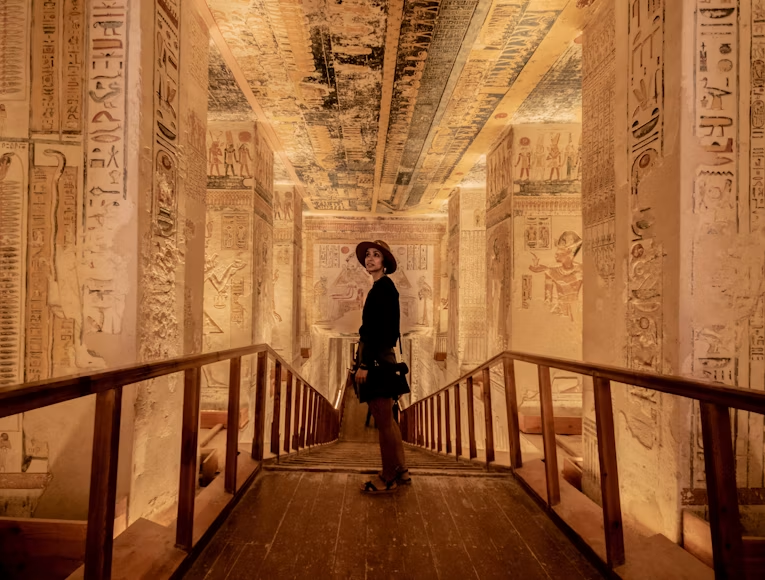
Valley of the Kings
Enter the richly decorated royal tombs of New Kingdom pharaohs in the cliffs behind Deir el-Bahari.
Explore Site
Deir el-Medina
Discover the village and tombs of the craftsmen who created the royal tombs of ancient Thebes.
Explore Site
Valley of the Queens
Explore decorated tombs belonging to queens, princes, and members of the New Kingdom royal family.
Explore Site
Medinet Habu
See the monumental temple of Ramesses III, celebrated for battle reliefs and surviving ancient color.
Explore SiteFrequently Asked Questions
Everything you need to know before visiting Hatshepsut Temple at Deir el-Bahari.
How much time should I spend at Hatshepsut Temple?
Most visitors should allow around one and a half to two hours to explore the terraces, chapels, royal reliefs, statues, and principal viewpoints.
Why is Hatshepsut Temple so important?
The temple is one of the finest monuments of the 18th Dynasty and reflects Hatshepsut’s political power, religious legitimacy, architectural ambition, and extraordinary royal program.
What are the most important reliefs to see?
The most famous include scenes of Hatshepsut’s divine birth and the expedition to Punt, along with religious reliefs connected with Amun, Hathor, Anubis, and royal ritual.
Who designed Hatshepsut Temple?
The temple is closely associated with Senenmut, one of Hatshepsut’s most trusted officials, who played a major role in the monument’s planning and construction.
Is Hatshepsut Temple part of a UNESCO World Heritage Site?
Yes. The temple forms part of the UNESCO World Heritage property known as Ancient Thebes with its Necropolis.
Can Hatshepsut Temple and the Valley of the Kings be visited on the same day?
Yes. They are located on Luxor’s West Bank and are commonly combined with the Colossi of Memnon in a half-day or full-day sightseeing tour.
Is Hatshepsut Temple suitable for visitors with limited mobility?
The temple has broad ramps and open terraces, but visitors still encounter steps, uneven stone surfaces, and significant walking. A carefully planned route is recommended.
Is a private Egyptologist recommended?
Yes. An Egyptologist can explain Hatshepsut’s unusual rise to power, her divine birth scenes, the Punt expedition, temple symbolism, and the significance of the chapels and statues.